Sound Design and Emotional Honesty in Independent Music
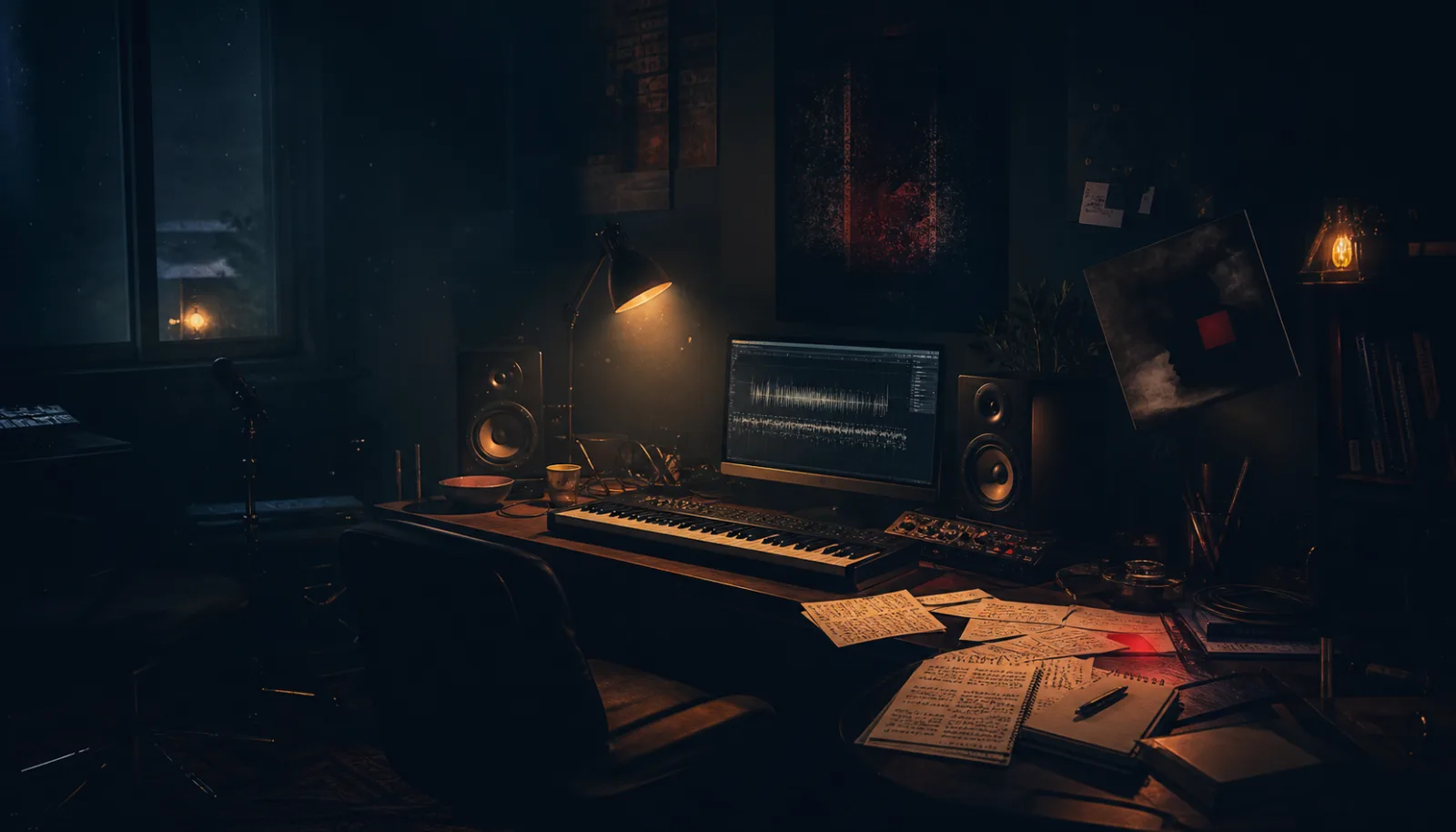
There is a moment in almost every independent track where the song stops being only a composition and starts becoming a room. Not a physical room, necessarily, but a felt space: close, distant, fragile, sharp, unfinished, intimate. For me, sound design lives in that space. It is not decoration after the writing is done. It is one of the ways the music tells the truth.
When people talk about honesty in music, they often mean lyrics, performance, or confession. Those things matter. But emotional honesty can also sit inside a tone, a texture, a silence, or the way a sound arrives slightly before you expect it. A synth can feel guarded. A piano can feel exposed. A drum can feel like control, panic, memory, or release, depending on how it is shaped. The same chord can say different things when it is dry and close, blurred in reverb, distorted at the edges, or barely audible under a layer of noise.
Sound as a Personal Decision
Independent music-making gives you a strange kind of freedom. You can choose the sound because it is yours, not because it fits a format. That freedom is beautiful, but it also asks for honesty. If every choice becomes bigger, cleaner, louder, and more impressive, the track can begin to hide from itself. Sometimes the more honest choice is smaller: a vocal left a little raw, a bass that does not fill every empty space, a rhythm that breathes instead of proving itself.
Sound design is full of these decisions. How much polish does the song need before it loses its fingerprints? How much imperfection should remain before it feels careless? There is no universal answer. The answer changes with the song. What matters is whether the sound is serving the emotional center, or whether it is covering it.
The Texture of Feeling
I am drawn to sounds that carry evidence of pressure. A pad that bends slightly out of shape. A guitar or keyboard part that feels like it has passed through distance. Percussion that is more gesture than grid. These textures can make a piece feel more human because they suggest movement, resistance, and vulnerability. They remind the listener that music is not only a sequence of correct choices. It is a record of attention.
In independent work, attention is often the real luxury. There may not be a large team around the song. There may not be endless time. But there is the possibility of listening deeply and asking what the sound is actually saying. A bright tone might be too bright for a sad idea. A beautiful reverb might make a direct thought feel evasive. A rough edge might reveal something that a clean mix would smooth away.
Technology Without Disguise
Modern tools make it easy to transform anything. That can be inspiring, but it can also tempt us into hiding the source of the feeling. The goal is not to avoid technology. I love the way processing can open a sound, fracture it, stretch it, or turn it into something almost unrecognizable. The question is whether the transformation brings the listener closer to the emotional truth of the piece.
A processed sound can be honest if it expresses something the unprocessed sound could not reach. A simple untreated sound can also be dishonest if it is chosen only because it looks authentic from the outside. Honesty is not the same as rawness. It is alignment. The sound, the performance, the arrangement, and the intention need to belong to the same inner world.
Leaving Space for the Listener
One of the hardest parts of sound design is knowing when to stop. Independent music can become a place where every empty corner gets filled, because every tool is available and every layer feels like progress. But emotional honesty often needs space. Silence and restraint allow the listener to enter the track instead of only receiving it.
The most meaningful sounds are not always the most unusual ones. Sometimes they are the sounds that feel necessary: a low pulse that holds the song together, a distant noise that makes the room feel real, a small harmonic shift that changes the emotional weather. These choices may be subtle, but they create trust. They tell the listener that the music is not trying to impress them away from the feeling.
Making the Invisible Audible
Sound design, at its best, makes the invisible audible. It gives shape to tension, memory, hesitation, tenderness, and release. For an independent artist, that can be one of the most powerful parts. You are not only choosing sounds. You are choosing how much of the inner life of the song you are willing to reveal.
The honest choice is not always the roughest or simplest one. It is the one that lets the music stand in its own emotional light without pretending to be something else. That is where sound design becomes more than craft. It becomes a way of listening to the truth of the piece, and then letting that truth be heard.
Continue Reading
Journal Note
How a Song Begins
Journal Note
From Image to Sound

Journal Note